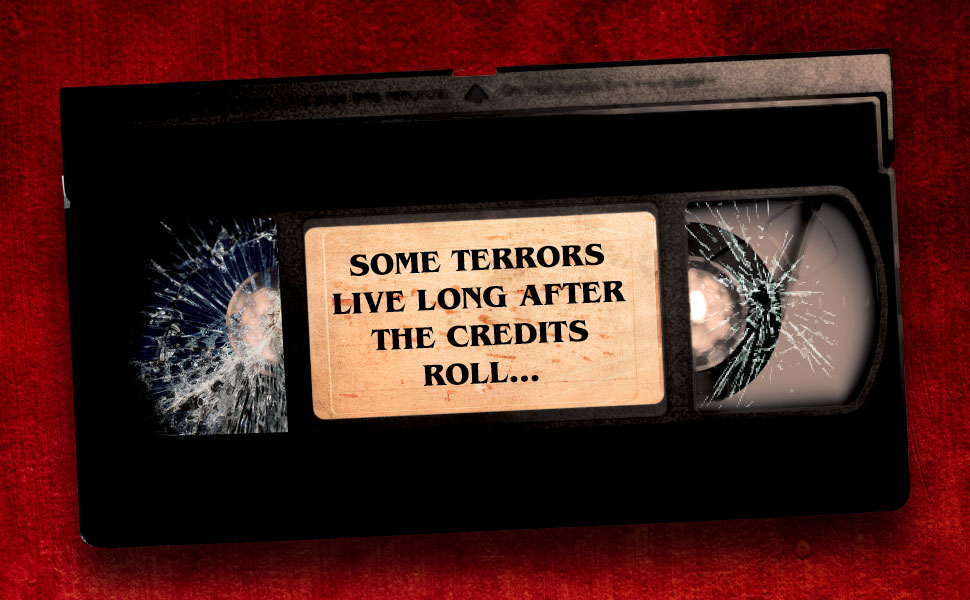
Paul Tremblay’s new novel Horror Movie landed last week; it’s a “chilling twist on the ‘cursed films’ genre.” Paul sent me a copy (thanks, man!). I really enjoyed it, and I interviewed him about Horror Movie this past Sunday, with help from John Langan and the Lovecraft eZine Podcast gang.
After you read Horror Movie, check out my curated list of books about strange and/or cursed films below. It’s not exhaustive; there are other worthy contenders. This is just a short list of books that I’ve personally enjoyed. And I’ve tried to include some that you might not see on other lists — Driveshaft, for example.
If there are any books that you’d like to recommend, please comment below! I’m always up for reading another novel in this genre.

Universal Harvester, by John Danielle. This one just might be my favorite. It’s set in the late 90s, in Iowa during winter, in a video store. I’m from Iowa, and this novel really rang true for me. It’s an ambiguous story, so just know that going in, but then again… life can be pretty ambiguous.
Life in a small town takes a dark turn when mysterious footage begins appearing on VHS cassettes at the local Video Hut. So begins Universal Harvester, the haunting and masterfully unsettling new novel from John Darnielle, author of the New York Times Bestseller and National Book Award Nominee Wolf in White Van
Jeremy works at the Video Hut in Nevada, Iowa. It’s a small town in the center of the state―the first a in Nevada pronounced ay. This is the late 1990s, and even if the Hollywood Video in Ames poses an existential threat to Video Hut, there are still regular customers, a rush in the late afternoon. It’s good enough for Jeremy: it’s a job, quiet and predictable, and it gets him out of the house, where he lives with his dad and where they both try to avoid missing Mom, who died six years ago in a car wreck.
But when a local schoolteacher comes in to return her copy of Targets―an old movie, starring Boris Karloff, one Jeremy himself had ordered for the store―she has an odd complaint: “There’s something on it,” she says, but doesn’t elaborate. Two days later, a different customer returns a different tape, a new release, and says it’s not defective, exactly, but altered: “There’s another movie on this tape.”
Jeremy doesn’t want to be curious, but he brings the movies home to take a look. And, indeed, in the middle of each movie, the screen blinks dark for a moment and the movie is replaced by a few minutes of jagged, poorly lit home video. The scenes are odd and sometimes violent, dark, and deeply disquieting. There are no identifiable faces, no dialogue or explanation―the first video has just the faint sound of someone breathing― but there are some recognizable landmarks. These have been shot just outside of town.
In Universal Harvester, the once placid Iowa fields and farmhouses now sinister and imbued with loss and instability and profound foreboding. The novel will take Jeremy and those around him deeper into this landscape than they have ever expected to go. They will become part of a story that unfolds years into the past and years into the future, part of an impossible search for something someone once lost that they would do anything to regain.
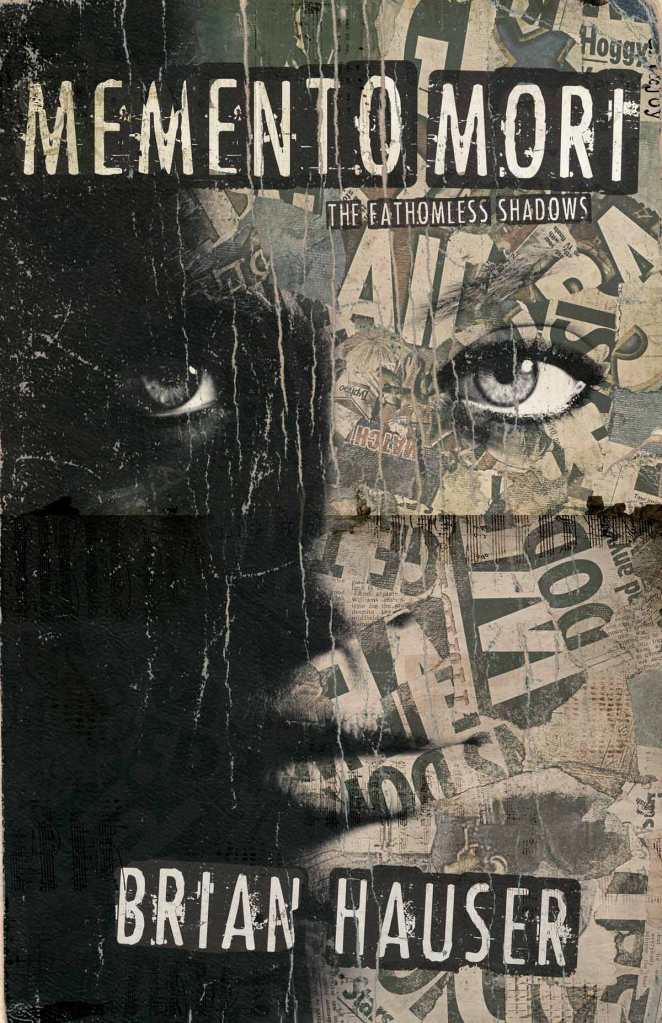
Memento Mori: The Fathomless Shadows, by Brian Hauser. The writer Pete Rawlik introduced me to this novel, and I’m so glad that he did. It has a definite King in Yellow vibe.
Underground filmmaker Tina Mori became a legend in the late 1970s with a stolen camera, a series of visionary Super 8 shorts (The Eye, The Stairs, The Imperial Dynasty of America) and a single feature film, heralded as her masterpiece, Dragon’s Teeth. Then she disappeared under mysterious circumstances. Was it foul play, or did Tina Mori go somewhere else? And if so, where? Could it have been the otherworldly Carcosa so often referenced in her films?
Through many layers, including letters, a ‘zine made by a teenage horror film fan, and a memoir written by Mori’s college roommate and muse, film historian and debut novelist Brian Hauser delves deep into Tina Mori’s life and legacy, exploring the strange depths and fathomless shadows situated between truth, fiction, fantasy, and the uncanny.

Driveshaft, by Michael Butler. This book first caught my eye because it features a guy obsessed with Margot Kidder.
When a mysterious cult horror movie from the 1970s pops up on YouTube, Ben simply has to see it. He has to see it, partly because it’s a horror film but mostly, because it stars Margot Kidder. Ben asks his girlfriend, Lena, to watch it with him. She does. Driveshaft, however, is no ordinary film and before they know it, Ben and Lena are trapped within its murky and disturbing world. Luckily, they meet fellow Driveshaft victims, Frank and Katherine. The foursome decide that the only way to rid themselves of the Driveshaft curse is through exorcism.
Part film-script, part novel, Driveshaft is a wry tribute to the wackier side of 70s cinema. It’s a bumpy ride where the real, and the not so real, collide. So, if you like the 70s, horror movies, cars with a mind of their own, and Margot Kidder then jump in by all means, but make sure you don’t belt up.
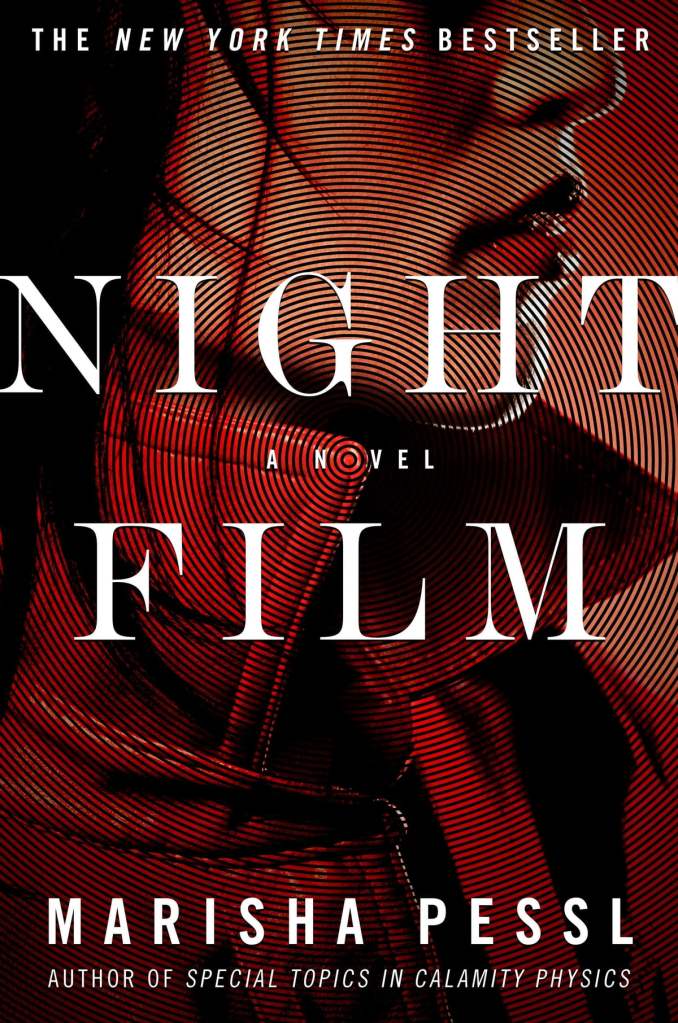
Night Film, by Marisha Pessl. I was enthralled by this book. I couldn’t read it in one sitting, but I sure as hell tried to!
Night Film tells the haunting story of a journalist who becomes obsessed with the mysterious death of a troubled prodigy—the daughter of an iconic, reclusive filmmaker.
On a damp October night, beautiful young Ashley Cordova is found dead in an abandoned warehouse in lower Manhattan. Though her death is ruled a suicide, veteran investigative journalist Scott McGrath suspects otherwise. As he probes the strange circumstances surrounding Ashley’s life and death, McGrath comes face-to-face with the legacy of her father: the legendary, reclusive cult-horror-film director Stanislas Cordova—a man who hasn’t been seen in public for more than thirty years.
For McGrath, another death connected to this seemingly cursed family dynasty seems more than just a coincidence. Though much has been written about Cordova’s dark and unsettling films, very little is known about the man himself.
Driven by revenge, curiosity, and a need for the truth, McGrath, with the aid of two strangers, is drawn deeper and deeper into Cordova’s eerie, hypnotic world.
The last time he got close to exposing the director, McGrath lost his marriage and his career. This time he might lose even more.
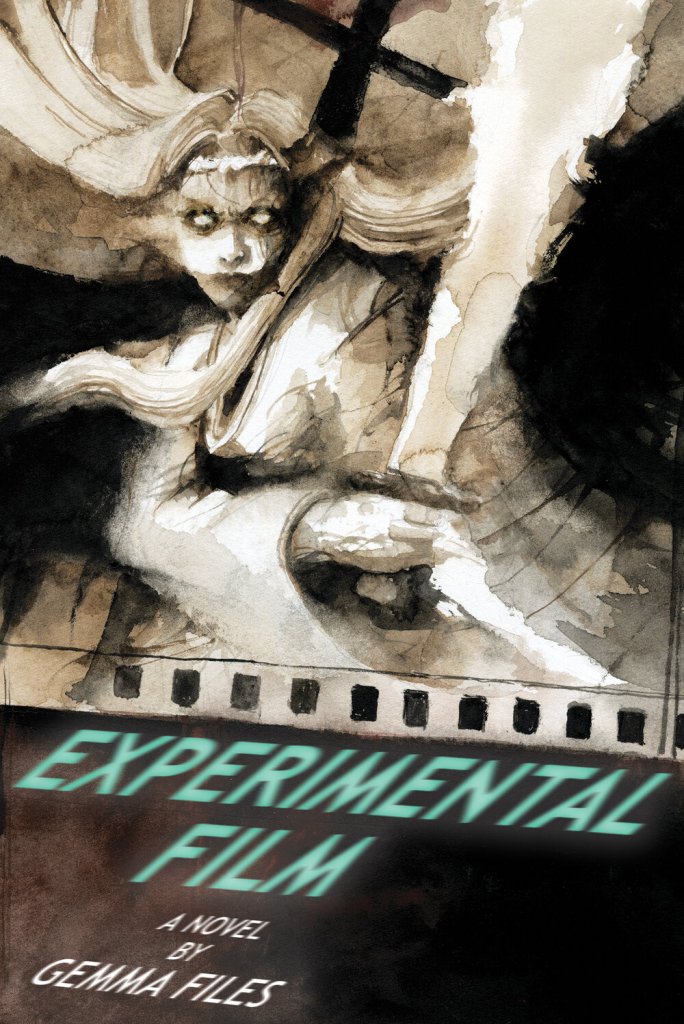
Experimental Film, by Gemma Files. Last but certainly not least, Experimental Film. As of the time of this writing, the Kindle edition is only $1.99. That’s a hell of a deal.
I truly hope to see an adaption of this on streaming series one day. And by the way, when you’re finished with this novel, check out the rest of Gemma’s work. You’ll be glad that you did.
Former film teacher Lois Cairns is struggling to raise her autistic son while freelancing as a critic when, at a screening, she happens upon a sampled piece of silver nitrate silent footage. She is able to connect it to the early work of Mrs. Iris Dunlopp Whitcomb, the spiritualist and collector of fairy tales who mysteriously disappeared from a train compartment in 1918.
Hoping to make her own mark on the film world, Lois embarks on a project to prove that Whitcomb was Canada’s first female filmmaker. But her research takes her down a path not of darkness but of light—the blinding and searing light of a fairy tale made flesh, a noontime demon who demands that duty must be paid. As Lois discovers terrifying parallels between her own life and that of Mrs. Whitcomb, she begins to fear not just for herself, but for those closest to her heart.
Winner of the Shirley Jackson Award for Best Novel.

Discover more from The Lovecraft eZine
Subscribe to get the latest posts sent to your email.
 The Lovecraft eZine
I love the “cursed movie” sub-genre. You might want to track down the BBC Radio play “Earworm”, which details a TV researcher’s attempt to track down “Britain’s worst director”, whose debut movie was only shown once and had a terrible effect on the people who viewed it…
LikeLiked by 1 person
That sounds great. I’ll check it out.
LikeLike
Theodore Roszak’s Flicker and Tim Lucas – Throat Sprockets immediately spring to mind.
LikeLiked by 1 person
I would recommend for this list ‘Ancient Images’ by Ramsey Campbell (1990).
LikeLiked by 1 person
Yes, Ancient Images is excellent — I read it recently. Of those above, I’ve also read Experimental Film and Memento Mori. And then there is Silver Nitrate by Silvia Moreno-Garcia. The cursed film has become something of a horror subgenre.
LikeLike